
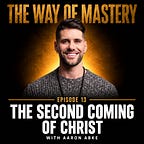

What if waiting for Jesus to save us is keeping us from living what he taught?
To love our neighbors. To forgive those who hurt us. To look within. To bring compassion into the moments when it feels hardest.
In this episode of The Way of Mastery, I sit down with Aaron Abke to explore the teachings of Jesus and what it means to put them into practice. Together, we ask a provocative question: could the Second Coming of Christ point toward an awakening of Christ consciousness within humanity?
Aaron shares his journey from evangelical worship pastor to questioning his inherited beliefs, exploring Eastern philosophy, and rediscovering the teachings of Yeshua. We discuss his understanding of Jesus’ original message and why he sees love, forgiveness, and personal responsibility as essential to the spiritual path.
We explore the appeal of religious certainty, the consequences of handing our spiritual authority to others, and Aaron’s perspective on the differences between Jesus’ teachings and Paul’s theology. We also connect these questions to the Law of One, Kundalini awakening, and the everyday work of opening the heart.
This conversation invites us to examine how our beliefs shape the way we live. How do we respond when we feel hurt? Can we extend compassion to someone we disagree with? What would change if we took Jesus’ invitation to love one another seriously?
What does living the teachings of Jesus mean to you?
Share your perspective in the comments.
Connect With Aaron
→ Take The SQ Test
→ 4D University
→ Follow Aaron on Instagram
Connect With Christopher
→ Join The Mastery Collective
→ Download Beats and Breath App
→ Follow Christopher on Instagram
Key Takeaways
The desire for certainty can shape our spiritual choices. Christopher and Aaron explore how destabilizing spiritual experiences can make clear rules, familiar structures, and absolute answers feel especially appealing. They discuss this as one possible motivation for moving toward religion, rather than a universal explanation for conversion.
Questioning inherited beliefs can open a deeper inquiry. Aaron describes leaving his role as an evangelical worship pastor, studying Eastern philosophies, and returning to the teachings of Yeshua with a different perspective.
A spiritual label tells us little about a person’s actual understanding. Aaron challenges broad labels such as “New Age” when they replace engagement with what someone actually believes or teaches.
Beliefs become meaningful through the way we live. In Aaron’s reading of Jesus, love of one’s neighbor, forgiveness, and conduct are central to following the teachings. The practical invitation is to examine how spiritual beliefs show up in relationships and everyday decisions.
Outsourcing spiritual authority can become a pattern. Christopher connects the expectation of an external savior with the tendency to hand personal power to teachers, gurus, or institutions. He emphasizes responsibility for one’s inner life and choices.
Forgiveness is a central practice in the way of the heart. The conversation presents forgiveness as a way to loosen judgment and resentment and deepen our capacity for love.
Integration shows up in ordinary life. Aaron describes a shift from extraordinary experiences toward a steadier sense of connection, less habitual judgment, and more compassion for others.


